
Completing your 200 hour yoga teacher training is an incredible achievement. Over the past few weeks, you’ve learned about yoga philosophy, anatomy, sequencing, pranayama, meditation, and how to safely guide others through their practice. But once you receive your certification, a new challenge often appears.
How do you confidently teach your very first yoga class?
If you’re feeling excited, nervous, or even a little unsure, that’s completely normal. Every experienced yoga teacher remembers their first class. The important thing is to remember that your students aren’t expecting perfection. They’re simply looking for a teacher who can guide them with confidence, kindness, and care.
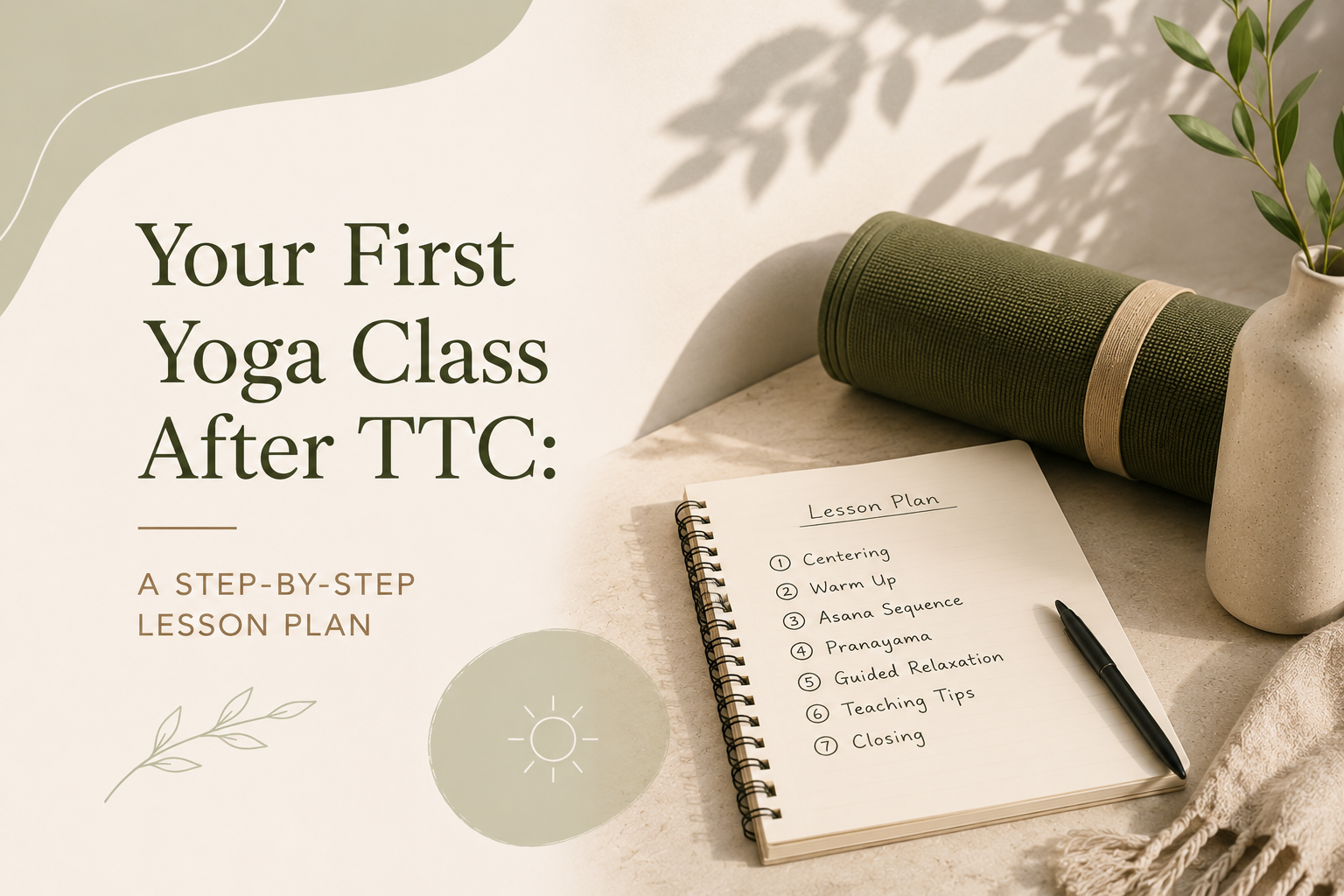
Having a simple lesson plan can help you feel more prepared and allow you to enjoy the experience instead of worrying about every little detail.
Arrive Early and Set the Tone
Try to arrive at least 15 to 20 minutes before your class begins. This gives you time to arrange the space, check your music if you’re using it, set up your mat, and welcome students as they arrive.
Those extra few minutes also help you settle your own nerves. Instead of rushing in at the last minute, you can take a few deep breaths, ground yourself, and begin the class feeling calm and focused.
A relaxed teacher naturally helps students feel more comfortable too.
Welcome Your Students
The first few minutes of class are about creating a connection.
Introduce yourself with a smile and make everyone feel welcome. If it’s a beginner class, ask whether anyone is completely new to yoga or has any injuries or physical limitations you should be aware of. This allows you to offer safer alternatives throughout the practice.
It’s also helpful to briefly explain what the class will include so students know what to expect before you begin.
Help Everyone Arrive with Their Breath
Before moving into yoga postures, invite everyone to pause and simply breathe.
A few minutes of mindful breathing helps students leave behind the stress of their day and become fully present on their mats. It also creates a calm, focused atmosphere that carries through the rest of the session.
Sometimes, the quietest moments at the beginning of class become the most meaningful.
Ease the Body into Movement
There’s no need to rush into challenging poses.
Start with slow, gentle movements that prepare the body for practice. Neck rolls, shoulder circles, Cat-Cow stretches, seated twists, hip openers, and gentle spinal movements are all great ways to warm up safely.
A thoughtful warm-up not only reduces the risk of injury but also helps students feel more connected to their bodies before moving into the main sequence.
Keep the Main Practice Simple
When you’re teaching your first class, it’s easy to feel like you need to include everything you learned during your 200 hour yoga teacher training.
In reality, less is often more.
Choose a balanced sequence that includes standing poses, gentle backbends, twists, balance postures, and seated stretches. Focus on giving clear instructions instead of teaching complicated transitions.
Offer modifications whenever possible so everyone can practice comfortably, regardless of their experience level.
Your students will remember how supported they felt far more than how advanced the sequence was.
Gradually Slow Things Down
As the class begins to wind down, allow the energy to soften naturally.
Introduce gentle stretches and restorative postures that help release any remaining tension. This transition gives both the body and mind time to absorb the benefits of the practice before moving into relaxation.
A calm ending often leaves students feeling refreshed rather than rushed.
Give Savasana the Time It Deserves
Many new teachers worry that students will become restless during Savasana, but it’s often one of the most appreciated parts of class.
Allow five to ten minutes for complete relaxation if your schedule allows. Speak softly, keep your guidance simple, and give students permission to fully let go.
For many people, this quiet stillness is exactly what they needed when they walked into the room.
End on a Positive Note
Bring students out of Savasana slowly with gentle movement and a few deep breaths.
Take a moment to thank them for sharing their practice with you. A genuine smile, a few encouraging words, or a simple expression of gratitude helps end the class on a warm and welcoming note.
These small moments often leave a lasting impression.
Reflect After Every Class
Once your students leave, spend a few minutes reflecting on how the class went.
Instead of focusing only on what could have been better, also acknowledge what went well.
Ask yourself:
- Which parts of the class felt natural?
- Where did I feel most confident?
- Were my instructions easy to understand?
- What would I like to improve next time?
Every class is another opportunity to grow, and every teacher continues learning throughout their journey.
Begin Your Teaching Journey with Diya Yogashala
At Diya Yogashala, our 200 hour yoga teacher training in Rishikesh prepares students not only to deepen their personal practice but also to teach with confidence. Through hands-on teaching practice, supportive feedback, and guidance from experienced instructors, you’ll develop the skills needed to lead classes with clarity, compassion, and authenticity.
Whether you’re planning to teach professionally or simply share yoga within your community, your first class is just the beginning of a rewarding journey.
Your first class does not need to be perfect. A calm presence, a simple sequence, and genuine care for your students are more than enough to begin teaching with confidence.