
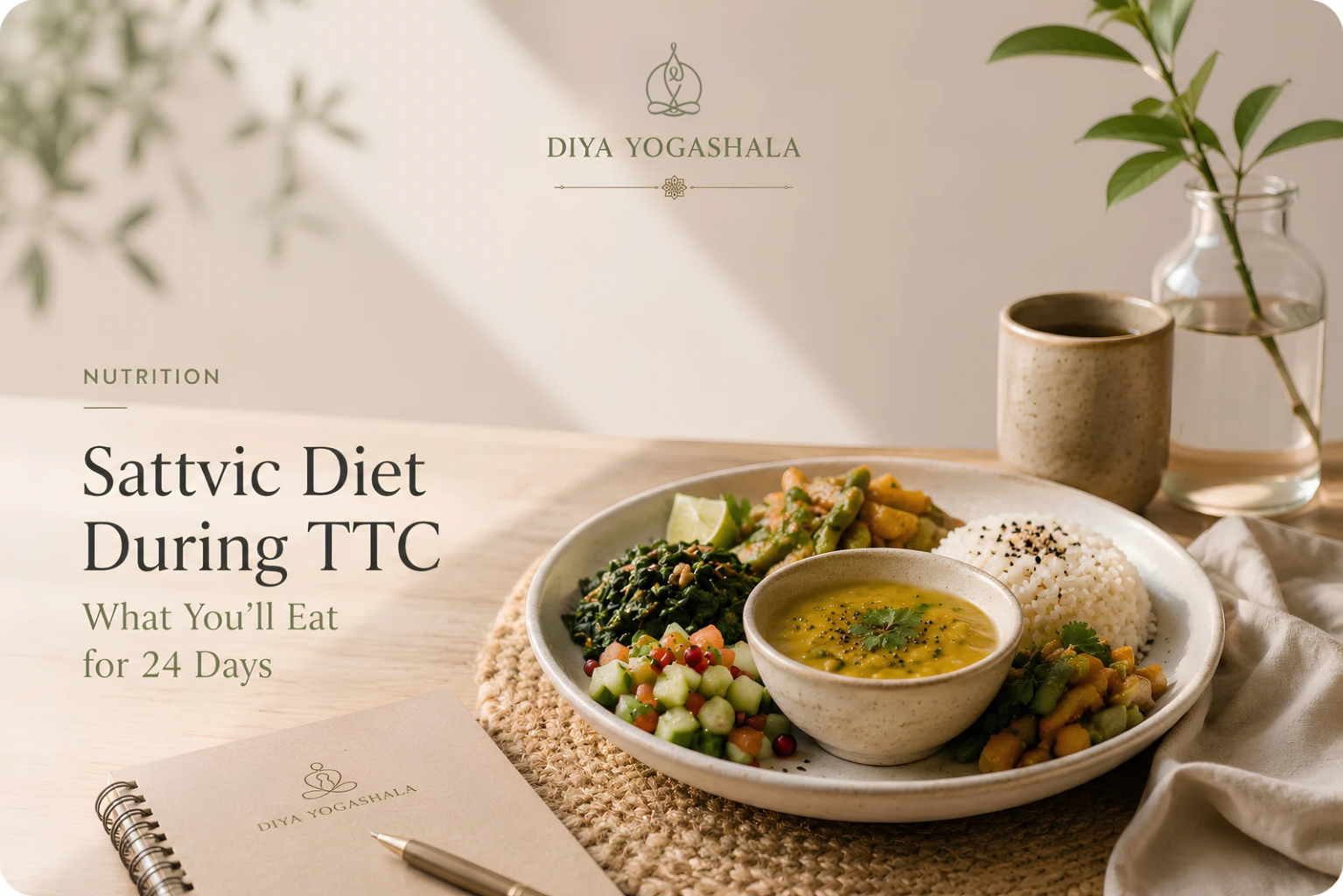
When students join a yoga teacher training course, they often expect to transform their physical practice, improve flexibility, and learn teaching techniques. However, traditional yoga considers transformation to be a complete process involving the body, mind, and lifestyle.
One important aspect of this journey is food. During a yoga teacher training course, especially in traditional programs, students are introduced to the concept of a Sattvic diet — a way of eating that supports physical health, mental clarity, and spiritual awareness.
A 24-day TTC journey is not only about learning yoga on the mat but also about creating mindful habits that support inner growth.
Understanding the Sattvic Diet in Yoga
The word “Sattva” comes from Sanskrit and represents purity, balance, harmony, and clarity. A Sattvic diet focuses on fresh, natural, and nourishing foods that are believed to create a calm and balanced state of body and mind.
In yogic philosophy, food is considered to influence not only physical energy but also thoughts, emotions, and overall awareness.
During a yoga teacher training, students experience how mindful eating can support their practice by improving digestion, maintaining energy levels, and encouraging a more focused mind.
Why Is a Sattvic Diet Followed During TTC?
A yoga teacher training course requires discipline, physical effort, and mental concentration. The food students consume plays an important role in supporting this demanding routine. A Sattvic diet during TTC helps students:
Improve Energy and Stamina
Fresh and balanced meals provide steady energy required for daily asana practice, meditation, and theory sessions.
Support Mental Clarity
Light and nourishing foods are believed to help maintain focus and reduce heaviness, allowing students to stay attentive during classes.
Develop Mindful Eating Habits
Students learn to become more aware of their relationship with food and understand how nutrition affects their overall well-being.
Align With Yogic Lifestyle Principles
A Sattvic diet complements yogic values such as balance, simplicity, and awareness.
What Do You Eat During a 24-Day TTC?
The exact menu may vary depending on the yoga school, location, and seasonal availability. However, a traditional Sattvic meal plan usually includes simple, fresh, vegetarian foods prepared with mindfulness.
Here is what students can typically expect during a 24-day yoga teacher training journey.
Morning Routine: Starting the Day With Nourishment
The day usually begins early with yoga practice, meditation, and cleansing routines. A light morning meal helps provide energy without making the body feel heavy. Common breakfast options include:
- Fresh seasonal fruits
- Herbal teas
- Warm milk or plant-based alternatives
- Light traditional preparations
- Sprouted foods
- Simple grains and wholesome ingredients
The focus is on easily digestible foods that prepare the body for an active day.
Lunch: The Main Nourishing Meal
Lunch is often considered the most complete meal of the day, providing essential nutrients for physical practice and learning. A typical Sattvic lunch may include:
- Freshly prepared vegetables
- Dal or lentils
- Rice or traditional grains
- Chapati or flatbreads
- Salads
- Yogurt or naturally prepared accompaniments
Meals are usually balanced, allowing students to maintain energy throughout the day.
Evening Meals: Light and Balanced
Dinner during TTC is generally lighter compared to lunch. Since students often practice meditation and relaxation techniques in the evening, lighter meals support better digestion and comfort. Common dinner options include:
- Vegetable soups
- Khichdi
- Light curries
- Steamed vegetables
- Simple traditional meals
The aim is to nourish the body while maintaining a calm and peaceful state.
Foods Commonly Included in a Sattvic Diet
A Sattvic diet generally focuses on fresh and natural ingredients such as:
Fresh Fruits and Vegetables
Seasonal fruits and vegetables provide essential nutrients while keeping meals light and refreshing.
Whole Grains
Rice, wheat, millets, and other grains provide sustained energy for daily activities.
Lentils and Legumes
Dal, beans, and other plant-based proteins support strength and nourishment.
Nuts and Seeds
Nuts and seeds provide healthy fats and important nutrients that support overall well-being.
Herbs and Natural Ingredients
Fresh herbs, spices, and traditional ingredients are used to enhance both taste and nourishment.
Foods Avoided During a Traditional TTC Diet
Many yoga teacher training programs limit or avoid foods that are considered heavy, overly stimulating, or disruptive to mindful practice. These may include:
- Processed foods
- Excessively spicy foods
- Heavy fried foods
- Alcohol and intoxicating substances
- Excessive caffeine
- Foods lacking freshness or natural preparation
The goal is not restriction but creating a supportive environment for transformation.
How a Sattvic Diet Changes Your TTC Experience
Following a Sattvic diet for 24 days allows students to experience the connection between food, energy, and awareness. Many students notice changes such as:
Greater Awareness of the Body
Mindful eating helps students understand how different foods affect their energy and emotions.
Better Connection With Practice
A balanced diet supports consistent participation in yoga, meditation, and learning sessions.
A Simpler Lifestyle
The TTC environment encourages students to slow down, become present, and appreciate simple daily routines.
Sattvic Eating as a Part of Yoga Beyond TTC
The purpose of following a Sattvic diet during teacher training is not only to complete a 24-day routine. It is an opportunity to understand how lifestyle choices influence overall well-being.
Yoga teaches that transformation happens through consistent awareness — including how we move, breathe, think, and nourish ourselves.
By experiencing a Sattvic lifestyle during TTC, students gain practical knowledge that they can carry into their personal lives and future teaching journeys.
At Diya Yogashala, students are introduced to yoga as a complete lifestyle that includes asana practice, meditation, philosophy, and mindful living. The Sattvic diet becomes an important part of the learning experience, helping students create balance between body, mind, and inner awareness. A 24-day yoga teacher training journey is not just about becoming a yoga teacher — it is about developing habits, discipline, and awareness that continue long after the course ends.