
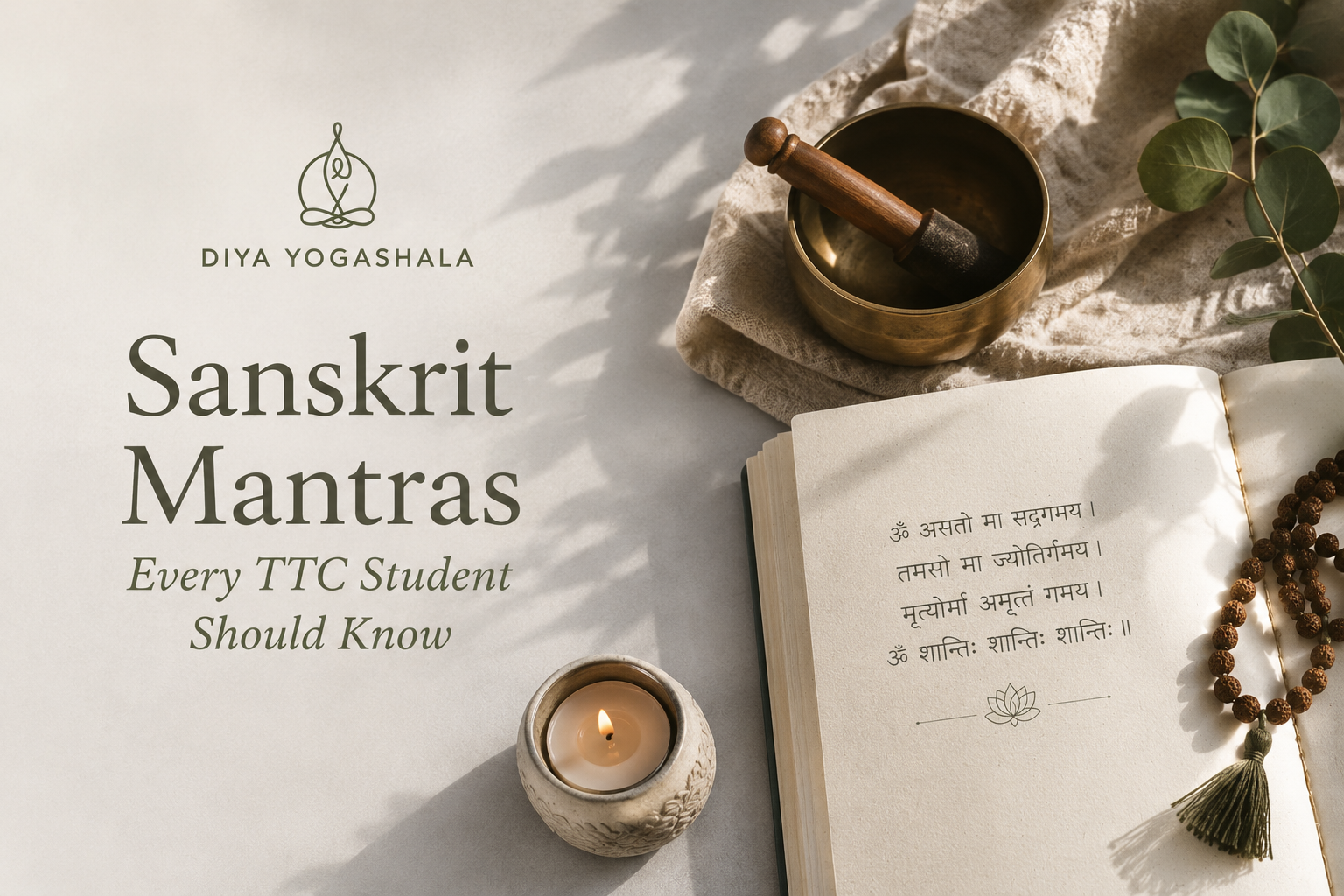
One of the most enriching aspects of a 200-Hour Yoga Teacher Training Course (TTC) is being introduced to the traditional Sanskrit mantras that have been passed down through generations of yogic practice.
For many students, chanting Sanskrit mantras is a completely new experience. Initially, the words may seem unfamiliar, but over time, these sacred sounds become an important part of daily practice, helping cultivate focus, mindfulness, and a deeper connection to yoga’s roots.
If you’re planning to join a yoga teacher training Rishikesh program, here are some of the most common Sanskrit mantras you are likely to encounter and why they matter.
Why Are Mantras Important in Yoga?
The word “mantra” comes from Sanskrit and is often translated as “a tool for the mind.”
Traditionally, mantras are sacred sounds, words, or phrases repeated to focus attention, calm the mind, and elevate awareness.
In yoga teacher training, chanting mantras can help students:
- Develop concentration and mental clarity
- Create a sense of unity within the class
- Connect with traditional yogic teachings
- Prepare the mind for meditation and practice
- Cultivate mindfulness and inner awareness
While understanding the meaning is valuable, many practitioners also appreciate the calming and meditative effect of simply reciting the sounds.
Om (AUM)
Perhaps the most recognized mantra in yoga, Om is often chanted at the beginning or end of a class.
In yogic tradition, Om represents the universal sound and the interconnectedness of all existence.
Chanting Om helps create a sense of presence and allows students to transition from daily distractions into a more focused state of awareness.
For many TTC students, this is the first Sanskrit mantra they learn.
Guru Brahma Guru Vishnu
This traditional mantra is often recited to honor teachers and the lineage of knowledge.
The mantra expresses gratitude toward those who guide us on our learning journey and acknowledges the importance of wisdom passed from teacher to student.
In many yoga schools, it is chanted before classes or special teachings.
Asato Ma Sadgamaya
One of the most meaningful mantras taught during teacher training is:
“Lead me from untruth to truth, from darkness to light, and from ignorance to wisdom.”
This mantra reflects the essence of the yogic path—continuous growth, self-discovery, and inner transformation.
Many students find this mantra particularly inspiring during their TTC journey.
Lokah Samastah Sukhino Bhavantu
This beautiful mantra is often translated as:
“May all beings everywhere be happy and free.”
It emphasizes compassion, kindness, and collective well-being.
Yoga extends beyond personal practice, and this mantra reminds practitioners that true growth includes wishing peace and happiness for others.
Om Shanti Shanti Shanti
The word “Shanti” means peace.
This mantra is commonly chanted at the end of yoga classes and meditation sessions.
The repetition of Shanti three times traditionally symbolizes peace within ourselves, peace in our surroundings, and peace in the wider world.
Its simplicity makes it one of the most accessible and powerful mantras for beginners.
Patanjali Invocation
Students enrolled in traditional yoga teacher training programs may also learn invocations dedicated to Sage Patanjali, who is widely regarded as the father of classical yoga philosophy.
These chants are often recited before philosophy classes and serve as a way of honoring the wisdom contained in the Yoga Sutras.
While the Sanskrit may initially feel challenging, regular repetition helps students become more comfortable and confident over time.
Do You Need to Memorize Every Mantra?
Not at all.
Most TTC students begin their journey with little or no knowledge of Sanskrit.
The goal is not perfect pronunciation from day one but rather developing familiarity, understanding, and appreciation for the tradition behind the practice.
Over the course of training, students naturally become more comfortable with common chants through daily repetition and guided instruction.
What matters most is approaching the practice with openness and curiosity.
How Mantras Enhance the TTC Experience
Learning Sanskrit mantras adds depth to a yoga teacher training experience. They help students connect with yoga beyond the physical postures and gain a greater appreciation for its philosophical and spiritual foundations.
Through regular chanting, many students report improved focus, emotional balance, and a stronger sense of connection to their practice.
For aspiring yoga teachers, understanding these traditional mantras also helps preserve the authenticity of yoga while sharing it with future students.
At Diya Yogashala, mantra chanting is integrated into the learning experience as part of a holistic approach to yoga education. Students are introduced to traditional Sanskrit chants in a supportive environment, helping them connect with the deeper dimensions of yoga while building a strong foundation for their personal and teaching journey.