
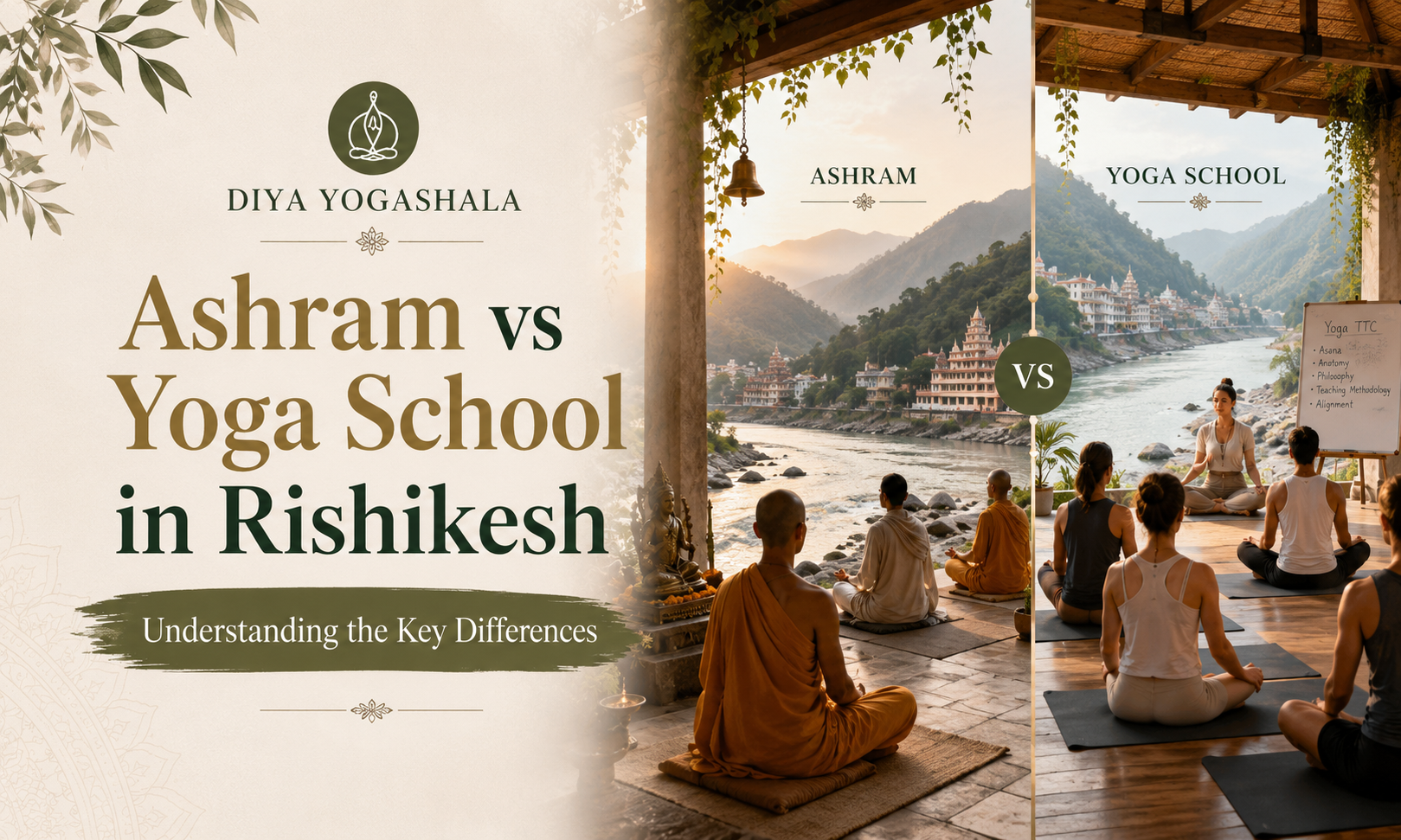
Rishikesh is known around the world as the Yoga Capital of the World, attracting thousands of students every year for yoga retreats, spiritual journeys, and yoga teacher training courses. As you begin researching your options, you'll likely come across two common choices: ashrams and yoga schools.
For many first-time visitors, the distinction can be confusing. Both offer opportunities to learn yoga and experience a yogic lifestyle, but they differ significantly in structure, teaching style, accommodation, and overall experience.
If you're planning a yoga teacher training Rishikesh program, understanding these differences can help you choose the environment that best supports your goals.
What Is an Ashram?
An ashram is traditionally a spiritual community where individuals live, study, and practice under the guidance of a spiritual teacher or guru. The focus of an ashram extends beyond physical yoga and often includes meditation, devotional practices, selfless service, and spiritual study.
Life in an ashram is usually simple and disciplined. Daily schedules often begin early in the morning and may include meditation, chanting, yoga practice, community meals, and spiritual discussions.
Many people choose an ashram experience because they want to immerse themselves in traditional yogic living and explore the spiritual dimensions of yoga more deeply.
What Is a Yoga School?
A yoga school is primarily focused on structured yoga education and professional training. While yoga philosophy and meditation are often included, the main objective is usually to provide students with a comprehensive understanding of yoga practice and teaching.
Most yoga schools offer certified programs such as:
• 200-Hour Yoga Teacher Training
• 300-Hour Yoga Teacher Training
• Short-term yoga courses
• Workshops and retreats
The learning environment is generally more organized and curriculum-based, making it ideal for students who want to deepen their practice or become certified yoga teachers.
Differences in Teaching Style
One of the biggest differences between an ashram and a yoga school is the teaching approach.
In an ashram, learning often happens through daily living, observation, and spiritual guidance. The emphasis is placed on personal transformation and inner growth rather than formal certification.
In contrast, yoga schools typically follow a structured syllabus. Students learn anatomy, alignment, philosophy, teaching methodology, pranayama, meditation, and sequencing in a systematic way.
Those pursuing professional teaching credentials often find yoga schools better suited to their goals.
Lifestyle and Daily Routine
Ashram life tends to be more traditional and community-oriented. Students are often encouraged to participate in daily responsibilities, maintain a simple lifestyle, and follow spiritual practices throughout the day.
Yoga schools also encourage discipline, but the environment is generally more focused on education and skill development. Students attend classes, complete assignments, and participate in practical teaching sessions while still enjoying opportunities for personal growth.
For many international students, yoga schools provide a balance between authentic yogic learning and modern comfort.
Which Option Is Better for Yoga Teacher Training?
The answer depends entirely on your intentions.
If your primary goal is spiritual immersion, simplicity, and experiencing traditional yogic living, an ashram may be a meaningful choice.
However, if you want comprehensive training, internationally recognized certification, experienced instructors, and a structured curriculum, a yoga school is often the better option.
Many students seeking a yoga teacher training Rishikesh course choose yoga schools because they offer both traditional wisdom and practical teaching skills needed for modern yoga instruction.
Making the Right Choice
Both ashrams and yoga schools offer valuable experiences, and neither is inherently better than the other. The right choice depends on what you hope to gain from your time in Rishikesh.
If you're looking for certification, in-depth training, and a supportive learning environment, a yoga school can provide the structure and guidance needed to help you grow as both a practitioner and future teacher.
At DIYA YOGASHALA, we combine traditional yogic teachings with a comprehensive training approach designed to support students from around the world. Through authentic instruction, mindful practice, and a nurturing community, we help students build a strong foundation for a lifelong yoga journey.