
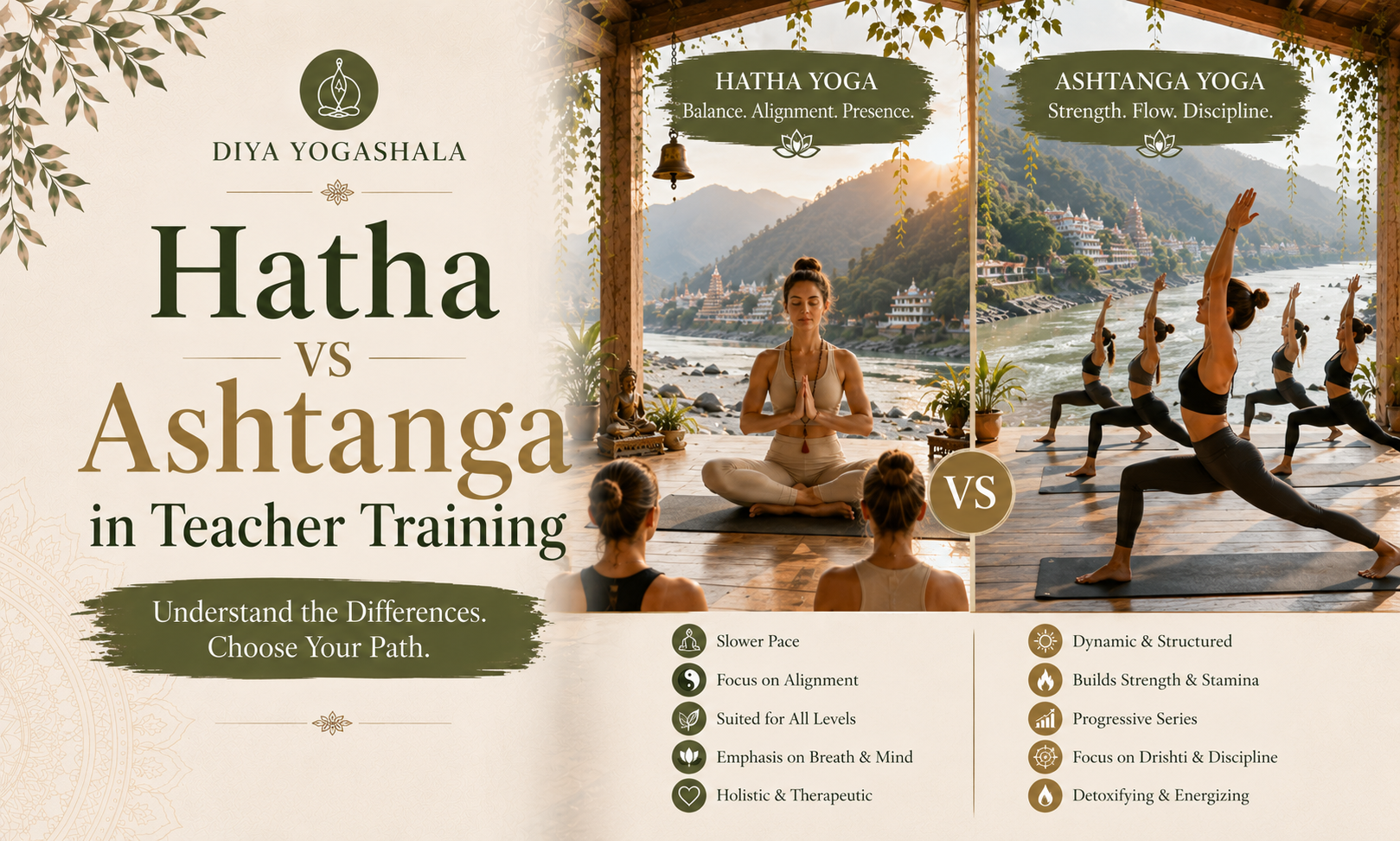
If you're considering a yoga teacher training course, one of the first decisions you'll encounter is choosing between Hatha Yoga and Ashtanga Yoga. Both styles are widely taught in yoga schools across Rishikesh and form the foundation of many teacher training programs. However, they differ significantly in pace, structure, and approach.
Understanding these differences can help you choose a yoga teacher training Rishikesh program that aligns with your goals, personality, and learning style.
Understanding Hatha Yoga
Hatha Yoga is often considered the foundation of many modern yoga practices. The word "Hatha" traditionally refers to the balance of opposing energies within the body and mind.
In a Hatha class, postures are usually practiced at a slower pace, allowing students to spend more time focusing on alignment, breathing, and body awareness. The emphasis is on developing a strong foundation while cultivating mindfulness throughout the practice.
Because of its accessible nature, Hatha Yoga is often recommended for beginners and students who want a deeper understanding of individual postures.
Understanding Ashtanga Yoga
Ashtanga Yoga is a dynamic and structured style of practice that follows a fixed sequence of postures. Developed and popularized by renowned teachers in India, Ashtanga combines breath and movement in a continuous flow.
The practice is physically demanding and requires discipline, consistency, and focus. Each posture builds upon the previous one, creating a system designed to develop strength, flexibility, stamina, and mental concentration.
Students who enjoy routine and challenge often find Ashtanga Yoga deeply rewarding.
Key Differences Between Hatha and Ashtanga
While both styles share the same yogic roots, their teaching methods differ considerably.
Pace
Hatha Yoga is generally slower and more deliberate. Students spend more time exploring alignment and understanding how each posture feels in the body.
Ashtanga Yoga moves at a more energetic pace, linking breath with movement through a set sequence.
Structure
Hatha classes often vary from day to day depending on the teacher's approach and lesson plan.
Ashtanga follows a consistent sequence, allowing students to track progress and deepen their understanding through repetition.
Physical Intensity
Hatha Yoga can be gentle or moderately challenging, depending on the class.
Ashtanga is typically more physically demanding and requires sustained effort throughout the practice.
Learning Style
Students who enjoy variety may appreciate Hatha Yoga's flexibility.
Those who thrive on routine and discipline often connect strongly with the structured nature of Ashtanga Yoga.
Which Style Is Better for Teacher Training?
The answer depends on your goals.
If you want to build a strong foundation in alignment, anatomy, breath awareness, and teaching principles, Hatha Yoga provides an excellent starting point. Its slower pace allows students to study postures in greater detail and develop confidence as future teachers.
If you enjoy a more physically demanding practice and appreciate consistency, Ashtanga Yoga may offer a deeper challenge. Many students value the discipline and focus that come from practicing a structured sequence every day.
In reality, many yoga teacher training Rishikesh programs incorporate elements of both styles. This allows students to experience the grounding nature of Hatha Yoga while benefiting from the strength and discipline cultivated through Ashtanga practice.
Choosing the Right Path for Your Journey
Rather than asking which style is better, it can be more helpful to ask which style supports your current stage of growth.
Both Hatha and Ashtanga offer valuable lessons that extend far beyond the yoga mat. Each encourages self-awareness, discipline, mindfulness, and personal transformation in its own unique way.
The best teacher training experience is often one that exposes students to multiple traditions while helping them discover their own authentic approach to practice and teaching.
At DIYA YOGASHALA, students are introduced to both traditional wisdom and practical teaching methodologies through a balanced and supportive learning environment. Whether your journey begins with Hatha, Ashtanga, or a combination of both, the goal remains the same: to deepen your understanding of yoga and build a strong foundation for lifelong learning.